Strategic framing:
A memory wiki is not a developer luxury. It is the operating layer that turns scattered notes, transcripts, and decisions into durable context, so future work starts with traction instead of rework.
AI becomes materially more useful when it stops beginning every interaction from zero. The decisive shift is not prompt inflation but building a memory environment that preserves facts, decisions, rationale, and references in forms that can be retrieved when work resumes later.
A memory wiki is not a developer luxury. It is the operating layer that turns scattered notes, transcripts, and decisions into durable context, so future work starts with traction instead of rework.
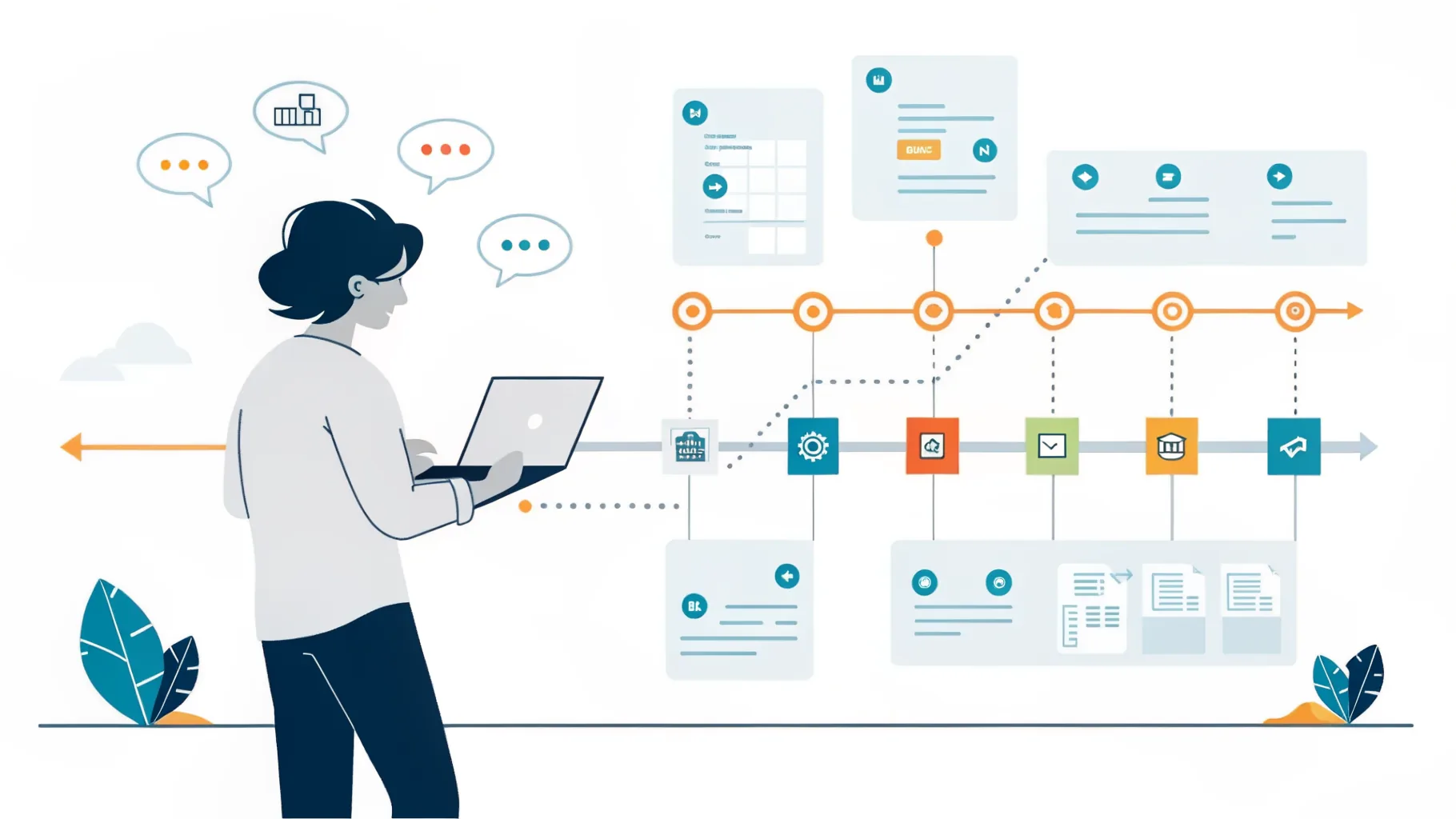
Most teams still treat AI like a disposable conversation partner. That is why so much effort gets burned on repetition. When people keep re-explaining company background, customer objections, tone guidance, or pricing logic, they are not facing a prompting problem. They are facing a memory design problem. The model may be capable, but the working environment keeps resetting the clock.
We see a clear pattern across client operations, internal systems, and multi-agent workflows: quality rises when the surrounding information is organized. A strong model dropped into scattered files and undocumented decisions behaves like a sharp new hire with no handbook. Context continuity becomes the real productivity multiplier because it lets useful work survive beyond the current session.
The practical shift is simple. Stop treating AI as a one-off chat window and start treating it as a participant inside a memory environment. Memory with structure consistently outperforms raw accumulation because retrieval depends on shape, not volume.
Chat History
Chat history records what happened in sequence. It is useful for local recall, but it mostly preserves volume: every question, every reply, every side path. Over time, long threads become hard to trust because the important decision is buried beside the disposable phrasing that surrounded it.
That is why relying on conversation logs alone creates a restart tax. The information exists, but finding the relevant part takes too much effort.
Knowledge Base
A knowledge base preserves what will still matter later: the decision, the rationale, the constraint, the pattern, and the next step. It turns passing exchanges into reusable units that can answer future questions without replaying the entire conversation.
This is where selective persistence changes the baseline. Instead of keeping everything equal, teams preserve what deserves to survive and make it retrievable when work restarts weeks later.
If you keep typing the same company overview, customer concerns, approved wording, or project constraints into prompts, you have already mapped your memory gaps. Capture those items as short maintained notes and store the reason each one matters.
Start with one reusable layer: approved language, recurring decisions, and the rationale behind them. Reliable retrieval beats perfect capture, because a modest system you can trust will reduce generic output faster than a massive archive nobody can navigate.
When in doubt, write for your future self. If someone returns to the topic in three weeks, what would help them restart with confidence instead of reconstruction?
Teams often assume that saving more material automatically creates more intelligence. It does not. Raw storage is not the same as memory. An archive of transcripts, screenshots, and loose notes may look comprehensive, but it quickly becomes clutter when nothing has been translated into durable, reusable units.
Consider a 90-minute meeting. The full transcript may be worth keeping as source material, yet only three insights may deserve long-term life: the decision that was made, the reason it was made, and the next action it created. Until those three items are extracted, labeled, and linked, the signal stays buried in noise. More data is not the same as more continuity.
This is why we encourage teams to think like editors, not hoarders. Preserve the source, but shape it. A memory wiki earns its value when future questions can be answered faster, with less ambiguity and less repeated explanation.
A staged flow showing how scattered information is transformed into reliable context through extraction, labeling, and linking.
Chats, meeting transcripts, screenshots, documents
Pull out the facts, decisions, constraints, and next steps
Compact notes written for future retrieval, not historical completeness
Connect items by topic, rationale, references, and relationships
An organized layer that answers future questions faster
Each new interaction starts with traction, not reconstruction
Facts are the stable pieces of information your team keeps needing: company background, product details, pricing logic, timelines, or customer realities. Preserve them in short, maintained notes so people are not retyping the same context every time work resumes.
When facts are easy to retrieve, AI stops guessing and starts grounding its output in a shared baseline.
Decisions deserve their own layer because they shape future work long after the meeting ends. Record what was decided, when it changed, and who needs to honor it.
This keeps teams from reopening settled questions simply because the original conversation has faded from view.
A decision without rationale becomes fragile. When you preserve why a choice was made, you make it easier to revisit intelligently instead of undoing it blindly.
Rationale is often the difference between healthy adaptation and chaotic drift.
Patterns capture recurring objections, repeated workflow failures, tone preferences, and lessons that surface across projects. They are especially valuable because they reduce repetition at scale.
Once identified, reusable patterns help both people and AI respond with more consistency and less reinvention.
References link back to the underlying source material: transcripts, documents, screenshots, or supporting records. They preserve traceability without forcing everyone to search the entire archive each time.
A strong memory wiki does not delete complexity; it organizes access to it.
Do not build one giant repository and hope retrieval will sort itself out later. Dependable context is built through stages: source material, processed notes, and connected memory. Each layer serves a different purpose, and collapsing them into one pile usually increases noise instead of confidence.
5 preserved units
The deeper business implication is easy to miss because demos reward instant answers. Durable value rarely comes from one impressive exchange. It comes from a system that remembers enough of the right things to improve future work. Better prompts can polish a moment; better structure changes the economics of knowledge work across weeks and months.
This deserves executive attention precisely because memory determines whether AI use scales cleanly or stalls under repetition. If every new session begins with background reconstruction, your team keeps paying the same cognitive bill. If each new interaction inherits a cleaner starting point built from facts, decisions, rationale, patterns, and references, usefulness becomes durable.
Our recommendation is straightforward: design memory before chasing more model power. Build the wiki, maintain the notes, and protect retrieval quality. That is how better work stops being occasional and becomes repeatable.